Endurance Training Methods from Marathon Athletes Reshaping Ice Hockey Player Development in Professional Circuits
Carlo Powell · Nov 3, 2026

Endurance Training Methods from Marathon Athletes Reshaping Ice Hockey Player Development in Professional Circuits
Professional ice hockey organizations have integrated endurance protocols originally developed by marathon athletes into player development pipelines, and these methods focus on building aerobic capacity through structured long runs, tempo intervals, and recovery-focused sessions that mirror the demands of extended game shifts. Data from multiple leagues shows that players who follow such programs maintain higher skating speeds deeper into matches while reducing injury rates tied to fatigue.
Core Endurance Techniques Borrowed from Marathon Training
Marathon preparation emphasizes steady-state aerobic work combined with threshold training, and hockey scouts now apply similar principles when evaluating prospects for professional circuits. Long slow distance runs build baseline stamina, whereas hill repeats and fartlek sessions translate directly to on-ice explosive efforts followed by sustained recovery skating. Organizations track metrics like VO2 max and lactate threshold using wearable technology that records heart rate variability during both dryland and ice sessions, and these figures reveal measurable gains in players who complete adapted marathon cycles.
Coaches divide training blocks into base-building phases lasting eight to twelve weeks, followed by sharpening periods that incorporate sport-specific movements. A typical week might include a twenty-kilometer easy run on Monday, threshold intervals on Wednesday, and a recovery shakeout jog on Friday, with strength work slotted between to preserve power output on the ice.
Implementation Across Professional Development Systems
North American and European clubs have embedded these protocols into junior academies and minor league affiliates, and prospects entering draft eligibility now undergo standardized endurance testing that includes a modified Cooper test alongside traditional skating evaluations. Teams report that athletes arriving with marathon-style backgrounds adapt faster to the three-game-in-four-night schedules common in professional circuits. In November 2026, several NHL clubs conducted mid-season reviews highlighting improved third-period goal differentials among players who completed summer endurance blocks modeled on marathon schedules.
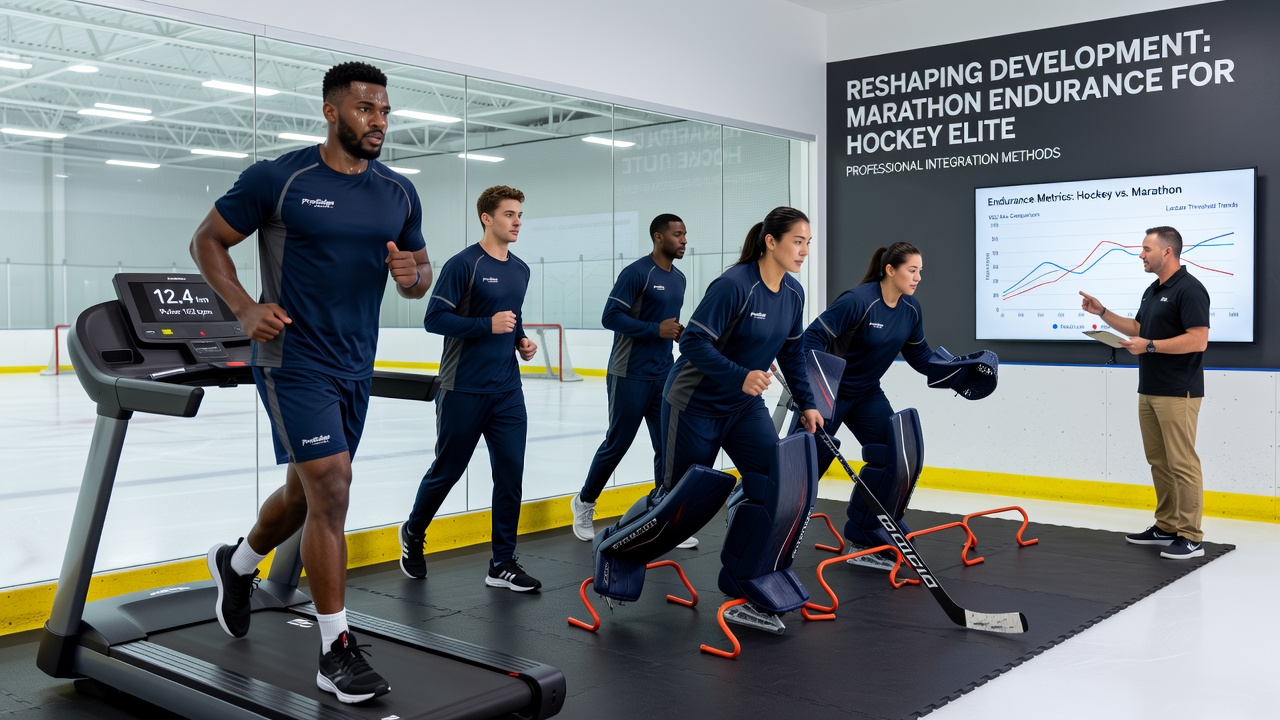
Development staff adjust volume based on individual monitoring rather than rigid templates, and this personalization accounts for differences in body composition and recovery profiles. European leagues have adopted parallel systems through collaboration with athletics federations, where former marathon specialists consult on periodization charts that align off-season running with on-ice tactical drills.
Performance Data and Physiological Outcomes
Studies conducted by the Canadian Sport Institute document average increases of 7 to 9 percent in time to exhaustion during repeated sprint tests after players complete a full marathon-derived endurance cycle. Recovery markers such as heart rate return to baseline improve by similar margins, allowing shorter bench times between shifts. League-wide statistics collected through wearable sensors indicate reduced soft-tissue injuries during the latter half of seasons when endurance emphasis begins in preseason.
Position-specific adaptations appear in defensive pairings and checking lines, where sustained low-intensity volume supports the constant positional adjustments required during penalty kills and defensive zone coverage. Forward groups incorporate more threshold work to sustain offensive zone time, and these adjustments correlate with higher expected goal rates in tracked games.
Challenges in Cross-Sport Transfer
Translating pure running volume to ice demands careful load management because repetitive impact differs from skating mechanics. Staff address this through gradual ramp-ups and complementary mobility work that targets hip flexors and ankle stability. Monitoring tools flag early signs of overreaching, and programs pause volume increases when variability drops below established thresholds.
Nutrition protocols also shift to support higher carbohydrate needs during base phases, and teams coordinate with sports dietitians to time fueling around both running and skating sessions. This integrated approach prevents the energy deficits sometimes seen when endurance volume rises without corresponding intake adjustments.
Conclusion
Endurance frameworks drawn from marathon athletes continue to influence scouting standards and daily training environments across professional hockey circuits. Physiological tracking confirms sustained improvements in stamina and recovery, while development pathways now routinely incorporate long-distance runs and threshold sessions alongside traditional ice work. As monitoring technology advances, organizations refine these transfers further, and the patterns established through 2026 suggest ongoing convergence between the two disciplines.