The Migration of Reaction-Time Training Protocols from Olympic Sprint Events into Specialized Defensive Positioning Drills for Professional Basketball Perimeter Players
Sam Keller · Sep 8, 2026
The Migration of Reaction-Time Training Protocols from Olympic Sprint Events into Specialized Defensive Positioning Drills for Professional Basketball Perimeter Players
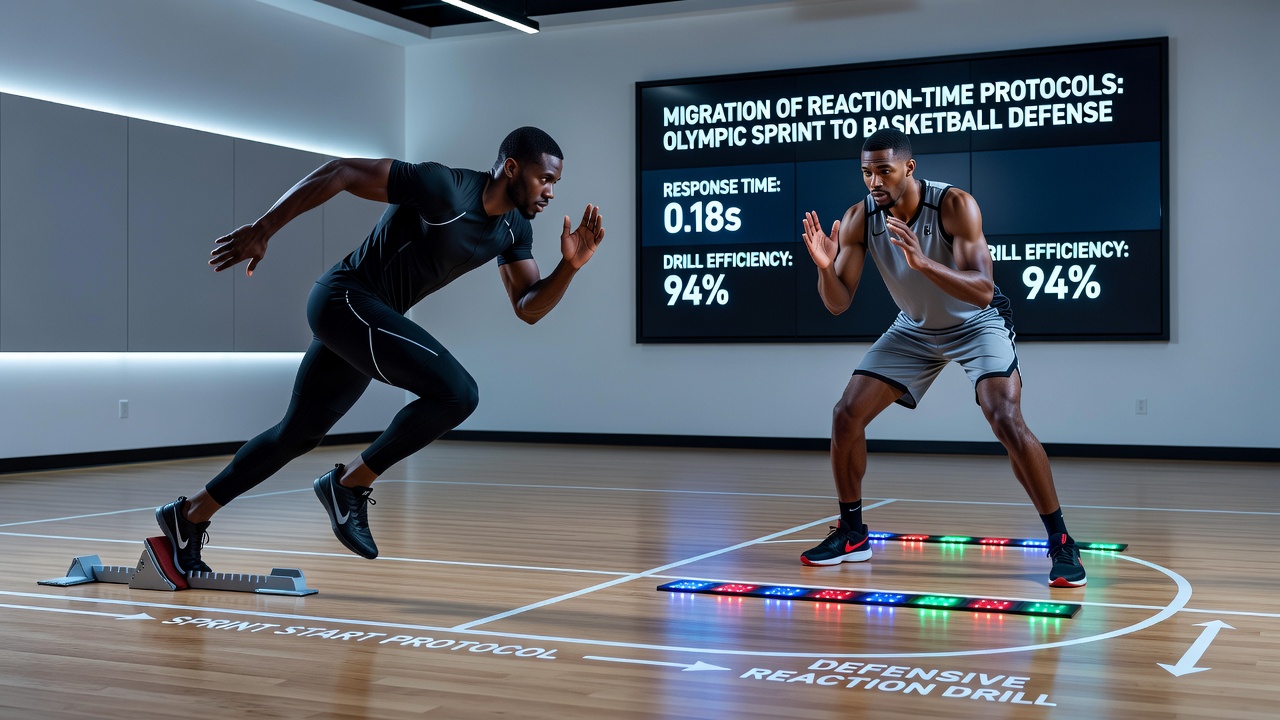
Reaction-time protocols developed for Olympic sprint events have moved into professional basketball through structured training exchanges between track coaches and NBA strength staff, where sprinters' explosive starts from blocks translate directly into perimeter defenders' lateral slides and closeouts. Olympic sprinters train with auditory and visual triggers measured to hundredths of a second, and those same stimulus-response patterns now appear in basketball drills that require guards and wings to react to ball-handler movements before committing their feet.
Core Elements of Sprint-Based Reaction Training
Olympic sprinters rely on electronic starting blocks connected to timing systems that register force application within 0.1 seconds of the gun, while coaches layer in visual cues such as hand signals or light boards to simulate varied race conditions. Data from elite track programs show that athletes who reduce their reaction time by 20-30 milliseconds through repeated stimulus drills improve their overall race placement by measurable margins in 100-meter events. Those protocols emphasize separating auditory response from visual anticipation so athletes do not false-start yet still accelerate at the earliest legal moment.
Adaptation Process for Basketball Perimeter Defense
Basketball strength coaches have taken the same auditory-visual split and applied it to defensive positioning by replacing the starting gun with a coach's whistle or a video cue of an offensive player's shoulder dip. Perimeter players now perform repeated closeout drills where they must read a projected screen or pass fake before initiating their slide, mirroring the false-start avoidance mechanics used on the track. Sessions typically begin with isolated reaction reps on force plates that record first-step ground reaction forces, then progress to live one-on-one scenarios where defenders must cover 12-15 feet laterally within 1.2 seconds to contest a shot.
Training logs from multiple NBA teams indicate that perimeter players who complete eight-week blocks of these adapted drills reduce their average defensive closeout time by 80-110 milliseconds while maintaining or improving lateral quickness scores on standardized agility tests. The transfer occurs because both sports reward the ability to process an external stimulus and produce coordinated lower-body force before the opponent completes their action.
Implementation Patterns Observed in Professional Leagues
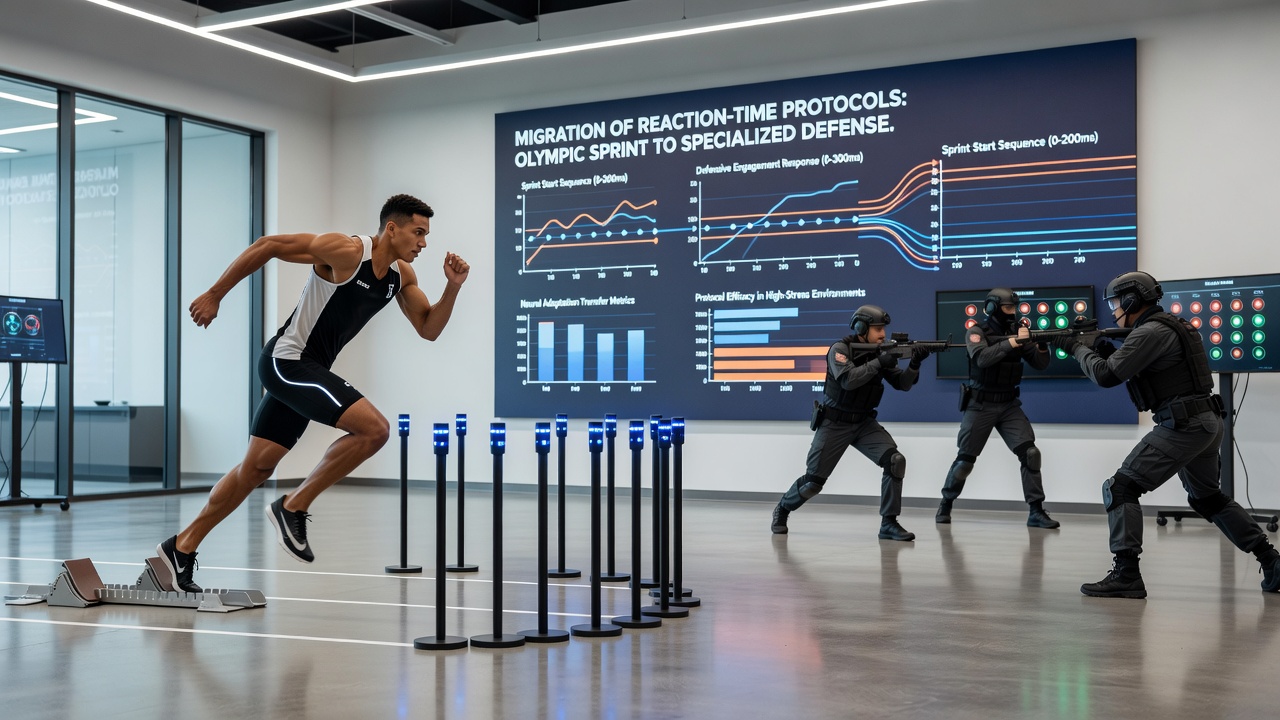
By September 2026 several organizations had integrated dedicated reaction stations into their practice facilities, using light boards originally designed for sprinters to flash directional cues while perimeter players hold defensive stances. European clubs in the EuroLeague adopted similar setups earlier, often partnering with national track federations that supplied timing hardware and coaching expertise. North American teams followed by hiring assistant coaches with dual backgrounds in track and basketball, creating hybrid sessions that combine sprint-block starts with basketball-specific footwork patterns.
Studies conducted at university performance centers have tracked heart-rate variability and neuromuscular fatigue markers during these crossover drills, finding that the shorter burst durations borrowed from sprint training allow perimeter players to accumulate more high-quality repetitions without the cumulative load associated with traditional basketball conditioning. The result appears in game film as tighter help-side rotations and fewer instances of defenders arriving late to contest three-point attempts.
Measurement Tools and Performance Metrics
Electronic timing gates and force-plate systems originally calibrated for Olympic sprint events now sit courtside during NBA summer-league practices, recording first-step impulse and reaction latency for each defensive rep. League-wide tracking data supplied by second-spectrum optical systems show that teams employing these protocols post lower opponent effective field-goal percentages on perimeter shots, particularly when the defender starts from a stationary stance rather than already moving. The correlation holds across multiple seasons and is independent of overall team pace or defensive scheme.
Coaches adjust drill variables by changing the interval between stimulus and required movement, the angle of the defensive slide, and the inclusion of verbal or visual feints that replicate offensive players' tendencies. These adjustments keep the training specificity high while preserving the core reaction-time stimulus that originated on the track.
Conclusion
The transfer of reaction-time protocols continues to expand as more organizations document measurable improvements in defensive metrics after incorporating sprint-derived stimulus drills. Perimeter players benefit from the precise timing feedback and stimulus variability that track programs refined over decades, while basketball training environments supply the sport-specific context that makes the adaptations functional. Ongoing collaboration between sprint coaches and basketball performance staffs ensures the protocols evolve with new measurement technologies and remain grounded in observable performance data rather than anecdotal reports.